
News Center
We are willing to sincerely welcome customers at home and abroad to negotiate, exchange business, sincere cooperation and seek common development! Welcome your message or call.
2025-08-30
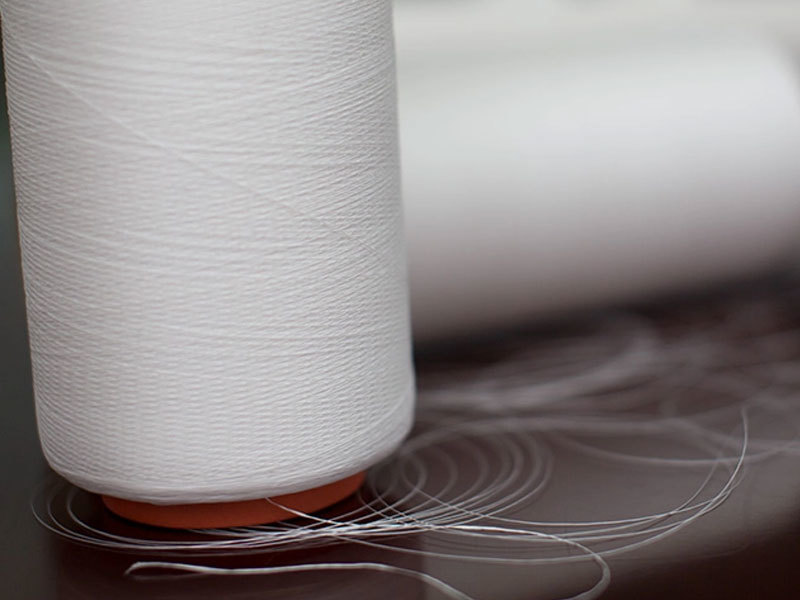
PTFE filaments (also known as polytetrafluoroethylene filaments) are continuous fibers produced by processing PTFE (polytetrafluoroethylene) resin through a specialized spinning technique. Their core value lies in combining PTFE's exceptional "resistance to extreme environments" with the filaments' unique "woven, high-strength" properties, making them the essential raw material for specialty textiles and functional components designed for demanding operational conditions.
2025-08-30
Precautions for Using PTFE Demister Strips
Avoid excessively high air velocities (typically recommended ≤3 m/s), as this could cause already coalesced droplets to be re-broken into smaller fragments, thereby reducing demisting efficiency. Regularly inspect the demister wires for cracks or deformations—especially under conditions involving strong gas flow impacts. If any damage is detected, replace the components promptly to prevent "short-circuiting and air leakage." Additionally, if the process stream contains sticky impurities (such as dust mixed with liquid mist), perform regular cleaning with clean water or an inert solvent (leveraging PTFE's non-stick properties, which allow easy restoration after rinsing).
2025-08-30
Typical Application Scenarios for PTFE Demisting Lines
Chemical Industry: Demisting at the tops of sulfuric acid production towers, hydrochloric acid absorption towers, and organic solvent distillation columns to prevent acid mist/solvent mist from contaminating equipment or polluting the environment via exhaust emissions.
2025-08-30
Ultimate corrosion resistance: It can withstand strong acids (such as sulfuric acid and hydrochloric acid), strong bases (like sodium hydroxide), powerful oxidizing agents (such as potassium permanganate), and most organic solvents, while remaining stable across a temperature range of -200°C to 260°C—making it the "standard equipment" for highly corrosive operating conditions.

2025-08-30
We specialize in the research, development, and application of PTFE-related products.
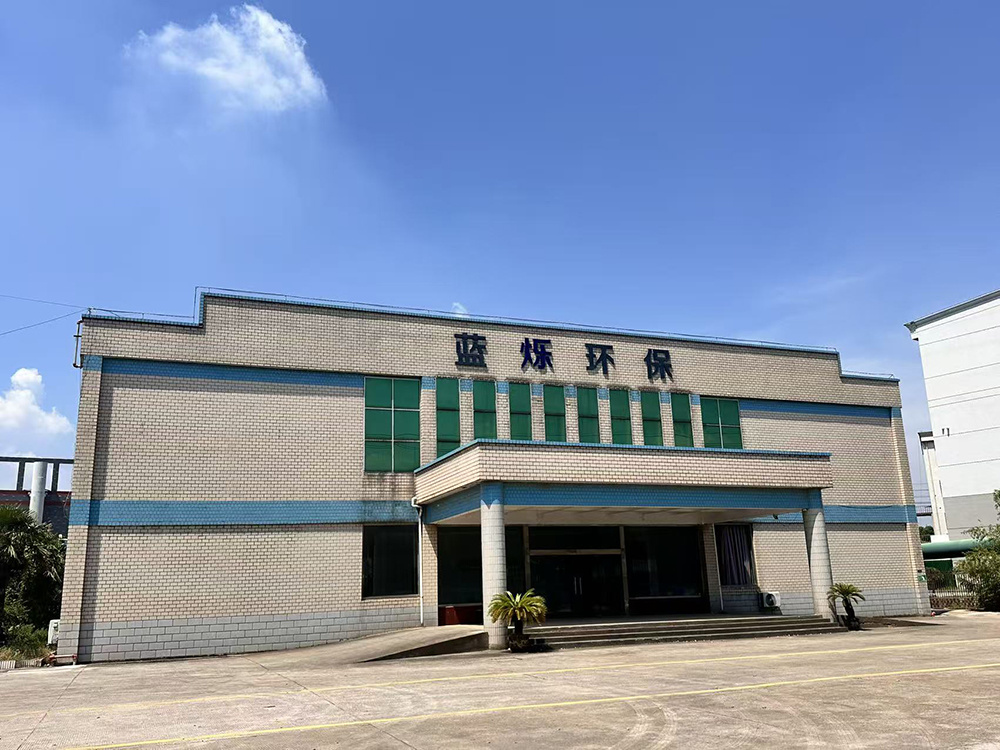
Changzhou Lancuang Environmental Technology Co., Ltd. is located in Changzhou, the birthplace of Yangtze River civilization and Wu culture. We specialize in the research, development, and application of PTFE-related products. Our current main products include: PTFE woven fabric, PTFE short fibers, colored PTFE sewing threads, colored PTFE filaments, PTFE tape, PTFE mesh curtains, PTFE cables, and ceramic-filled PTFE substrates, among others.
2025-08-30
Hydraulic method, also known as isobaric method or rubber-bag method
The hydraulic method, also known as the isobaric method or the rubber-bag technique, is a specialized approach used in manufacturing PTFE products. It involves applying hydraulic pressure to a rubber bag, which then forces the PTFE resin to expand uniformly into the mold, compacting it before undergoing sintering to form the final product. The process typically proceeds as follows: Place the rubber bag inside the outer mold, connect it to a water pump, and slowly fill it with tap water until the bag expands into a cylindrical shape. Next, evenly introduce the PTFE resin between the bag and the outer mold, close the mold, and continue pumping water to gradually increase the pressure—reaching 12–13 MPa—and hold this pressure for 30 minutes before releasing the water. Finally, reduce the pressure, carefully remove the mold, and proceed with sintering and cooling, resulting in a smooth, high-quality preform ready for further processing.

2020-03-20
Introduction to Polytetrafluoroethylene (PTFE) Molding Technology
PTFE is primarily formed using several common techniques, including compression molding, hydraulic pressing, extrusion, calendering, spraying, bonding, welding, and winding. The first five methods involve directly processing PTFE resin into finished products, while the latter three utilize PTFE plastic sheets or tapes to create a variety of items. In addition to these, there are also forming methods such as roll pressing and thermal molding. Below is a brief introduction to each of these techniques: 01 Compression Molding Compression molding typically uses suspension-grade resin. However, when producing thin sheets thinner than 1.5 mm, dispersion-grade resin is employed instead. The process involves the following steps: resin—screening (suspension resin is crushed, loosened, and then passed through a 20-mesh sieve)—pressing machine (where the material is loaded)

2020-03-20
Since its inception, it has always been based on the principles of "practical, enterprising, diligent and entrepreneurial, based on honesty and innovation," and has continuously strengthened corporate management, improved product quality, and strived to build Feiyan's corporate image.

2020-03-20
China's "Membrane Technology" Tackles Water Scarcity Challenges
Walking along the saline-alkali land by the Bohai Sea, one is met with endless desolation. Without access to clean water, nothing can be accomplished. Today, however, a thin filtration membrane has successfully addressed the critical issue of water scarcity. Under the "12th Five-Year Plan" major project on water pollution control and treatment, the research team tasked with "Industrialization of PVDF Membrane Components and Equipment for Drinking Water Treatment"—supported by the Ministry of Housing and Urban-Rural Development—has established over 30 "membrane-based" water plants across regions spanning the Yangtze River, Yellow River, Huaihe River, and Haihe River basins. Together, these facilities filter nearly one million tons of clean water every day. Membrane filtration: safe and highly efficient. In mid-August, reporters visited the water distribution and transmission center project in Tianjin’s Nangang Industrial Zone. The industrial area itself is built atop saline-alkali soil. Above ground lies

2020-03-20
What industries is PTFE primarily used in?
Common methods include injection, extrusion, molding, and coating. PTFE is widely used in fields such as electronics, electrical appliances, chemical industry, and machinery. In the electronics and electrical appliance sector, it’s employed to manufacture wire insulation layers, cable sheaths, components for nuclear reactor equipment, and even miniature potentiometers with anti-backlash slide mechanisms. In the chemical industry, PTFE is utilized to create corrosion-resistant linings for pipes, fittings, valves, pumps, storage tanks, and tower equipment, as well as heat exchangers, filter cloths, and packaging containers for chemical products. In the mechanical field, PTFE is used to produce gears, bearings, thin-walled structural parts, mechanical components designed for cryogenic applications, and sealing materials. PVDF, on the other hand, is a white, crystalline powder with high mechanical strength.
Contact us
Changzhou Lanshuo Environmental Technology Co., Ltd.
Changzhou Lanchuang Environmental Technology Co., Ltd.
Phone:0519-80896086
Contact: Li Shanyi13608355513
Contact: Liu Zhirui15216862207
Email:liuzhirui0908@163.com
Address: No. 2 Xin'an South Road, Aitou Town Industrial Park, Liyang City, Changzhou Municipality


Scan to view the mobile website